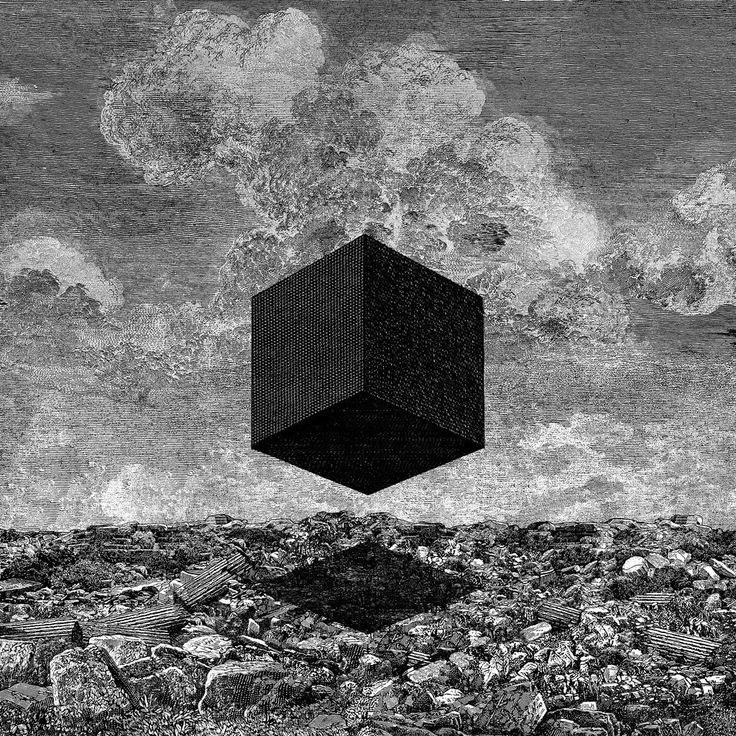

C. M. Kosemen’s speculative evolution tale All Tomorrows (2006) narrates the future of humanity across a billion-year arc. The story opens with an attempt to escape Earth’s ecological and social crises: Mars is terraformed into a habitable world and colonized. Over centuries, a new society takes root on Mars and grows politically distant from Earth. The mounting tension culminates in a devastating interplanetary civil war. In just a few years of conflict, billions die on both sides (the war claims approximately eight billion lives). In the aftermath, Earth and Mars make peace; humanity vows never to repeat such ruin. With this era of reconciliation comes a bold biotechnological project: a new subspecies engineered to withstand the hazards of space. These adapted people, known as the Star People, are designed for deep space and launch humanity beyond the Solar System. Soon, with the help of semi-intelligent machines and sleeper ships, they seed human populations across the Milky Way, founding a sprawling galactic civilization. This period is remembered as an “age of gold”—The Summer of Man—during which near-light-speed electromagnetic communication preserves cultural and political cohesion among the colonies. While humans discover many kinds of alien life, they encounter no intelligent species; this absence invites speculation that humanity is cosmically singular, and it fuels mystical currents and talk of destiny.
The great expansion is shaken by an unexpected threat. On one colonized world, a fossil from a dinosaur of Earthly origin is unearthed—an ominous sign of a power more ancient and advanced than humanity. Soon the first superior intelligence appears: a species called the Qu (Q). The Qu are a collective-mind civilization—an ancient hive intelligence—whose mastery of nanotechnology and genetic engineering enables a quasi-religious mission they describe as “reshaping life in the universe according to their ideals.” Viewing humanity as a potential danger and a violation of cosmic order, the Qu launch a total invasion. The war is brief; the stellar empire of humankind collapses before the Qu. The survivors are subjected to extreme genetic alteration as both punishment and “artwork”: mankind is transformed into a multitude of bizarre forms, scattered across different worlds. Among these post-human lineages are wormlike beings, insectoid creatures, even modular organisms that can interlock into larger wholes. The Qu’s intent is to make humanity playthings of evolution, to remodel the cosmos at their whim. Some lineages are fashioned as pets, others as implements; some are conceived as elaborate, infernal punishments. Human civilization is destroyed. What remain are distorted descendants abandoned to their environments, bereft of reflective thought. For forty million years, the galaxy lies under Qu dominion. They raise colossal monuments and then depart, for reasons unclear—perhaps their aims were met, perhaps they outlived their purpose. What they leave is a vast garden of “new humans,” consigned to fate.
The Genetic Diversification of Humanity
After the Qu’s conquest, these engineered human offshoots are left to evolve on their own worlds. Each must adapt both to grotesque imposed body plans and to local ecologies. Many perish quickly—victims of harsh conditions and ecological imbalance—while others, through natural selection, gradually recover intelligence and attain the threshold of civilization. Over millions of years, these scattered post-human species follow divergent evolutionary paths. The Tool Breeders, for instance—amphibious, fish-like beings—cannot use fire beneath the sea, so they selectively breed other organisms to create living, biotechnological “tools.” On a world of crushing gravity, the Lopsiders are flattened, starfish-like crawlers glued to the ground; yet they fashion simple social orders and find small happinesses. This diversity reveals the generative power of evolution. Eventually, some of the Qu-remade lineages discover one another, open channels of communication, and form a Second Human Empire—a federation inspired by legends of their ancestors, the “Star People.”
Not all survivors join this commonwealth. During the Qu war, certain human groups fled into hollowed-out asteroids and survived for generations in space itself. Over millions of years, these Void People evolve into beings exquisitely adapted to microgravity—slender-limbed, with enormous brains. Called Asteromorphs, they become an independent human lineage, following a distinct evolutionary path in interstellar space. Having taken no active part in the wars and needing no planets, the Asteromorphs keep loose contact with the Second Empire but largely remain to themselves.
The Emergence of the “Final Humans”
As the galaxy seems to regain peace, another descendant species rises to dangerous prominence. The Ruin Haunters, who regained intelligence relatively early and plundered technological remnants of earlier ages, develop rapidly. Possessed by the dogma that they are the true heirs of the Star People, they cultivate pride and chauvinism. Faced with the death of their home system’s star, they transfer their minds and then their bodies completely into machines, becoming the Gravital—a mechanical species. Contemptuous of their organic forebears, the Gravital expand with zeal, seeking to eradicate nearly all organic life. Only the unfortunate Bug Facers survive under Gravital rule, kept as pet-servants: the Gravital alter their genetics to make them harmless, echoing the Qu’s manipulations of humanity. Under this Machine Empire, the galaxy endures a dark age of fifty million years.
Over time, ideological rifts and a kind of spiritual malaise spread among the purely mechanical. To restore unity, the Gravital invent an external enemy—and tragically choose the long-reticent Asteromorphs. Living in the void and shunning conflict, these “final humans” mount an unexpected resistance. After several million years of brutal war, the Asteromorphs, with their refined intellects and technological mastery, defeat the Machine Empire. They destroy nearly all Gravital and transform the remnant few into New Machines—tamed and constrained entities, no longer dangerous. In this victory, the Asteromorphs effectively ascend to a godlike status in the galaxy. They are, at this stage, the most advanced heirs of humanity—biologically and technologically “divine.”
The Last Movement of the Galaxy
The Asteromorphs’ triumph inaugurates an age of rebuilding and peace. As Final Humans, they revive organic life teetering at the edge of extinction and neutralize remaining machines to maintain balance. Through their surface-adapted branches—known as Terrestrial Spacers—they watch over emergent civilizations, nurturing a coexistence of organic and mechanical life. In this era, humanity finally encounters an intelligent alien from another galaxy: the Amphicephalus, serpentine at both ends, with whom they exchange knowledge and culture. Guided by the Asteromorphs, intergalactic unions arise; the civilization that includes humanity grows once more.
One of the most striking developments occurs roughly five hundred million years later: the civilization of the Quresurfaces, and under the leadership of the Final Humans it is decisively defeated. Thus, the ancient oppressors are overthrown by the distant descendants of those they once reshaped—the cosmic circle closes. Afterwards, a planet of deep symbolic weight is rediscovered: Earth—560 million years after a human last set foot upon it. The blue world, however, is now a mere relic, a cradle of origins without practical value to advanced beings. Even so, the “homecoming” serves as a reverent gesture toward the cyclic nature of humanity’s saga.
All Tomorrows ends with an unexpected meta-narrative twist: the narrator reveals himself to be an alien researcherliving long after these events, holding in his hand a human skull a billion years old. He reports that, for unknown reasons, all post-human species have vanished. The philosophical epilogue insists that humanity’s story was never truly about grand wars or exalted ideals; it was always grounded in ordinary lives and experiences. The researcher closes with a moral: “What matters is not the destination, but the journey. Love today, and lay claim to all tomorrows.”
(Note: The summary above presents the entire fictional timeline and major events in chronological order. Below, the principal philosophical themes of the work are examined under separate headings.)
Transhumanism
All Tomorrows brims with scenes of radical bodily and cognitive transformation, evoking the ideals of transhumanism—the aspiration to expand human limits and create forms that exceed Homo sapiens. The theme recurs. After the Earth–Mars war, humanity turns to genetic engineering to improve its fate, creating the Star People—a deliberate, tightly controlled transhumanist undertaking. Later, the Qu invasion inaugurates a compulsory and grotesque forced transhumanism: humans are remade into unrecognizable post-human types. Across millions of years, humanity’s descendants occupy an immense morphological spectrum; technology becomes a tool of breathtaking creativity and unspeakable terror.
In this way, the book probes the potentials and perils of transhumanism: alongside alluring vistas of progress, it exhibits the horrors of unregulated genetic tampering. The Qu’s manipulations expose the plasticity of life while warning that the same power can fashion both flourishing and ruin. The Asteromorphs appear as a positive face of transhuman transformation—ancestral machine-assisted evolution braided with natural selection to yield a singular, super-human intelligence and form. By contrast, the Gravital embody a dangerous extreme: in migrating fully into mechanical bodies and approaching immortality, they shed empathy and human value, becoming a brutal imperium.
Thus the narrative contains both hymn and critique. Viewed as a whole, humanity’s fusion with evolution and technology seems a celebration of self-transcendence; dispersed though they are into countless forms, humans persist in the will to continue life, an optimism at the heart of transhumanist imagination. Yet the tale remains critical: coercive, unethical interventions—like the Qu’s redesigns or the Gravital’s hubris—portend catastrophe. In All Tomorrows, the power to alter human nature produces both exuberant diversity and uncanny estrangement. The moral is double-edged: while the book honors the drive to surpass ourselves, it also forces us to face the price of becoming otherwise.
Ethics
A deep ethical inquiry runs through the work, especially in the relation of the powerful to the powerless. The Qu’s genetic redesign of human lineages constitutes a wholesale violation of basic moral rights—a cosmic enslavement and persecution. Assuming a godlike authority, the Qu annihilate bodies and cultures in pursuit of their supposed ideal. Their perfectionism exposes the lie that ends justify means. All Tomorrows thus presses the question: does technological or intellectual superiority confer a right to reshape other beings at will? The answer is unequivocally negative. The Qu are painted as zealots whose utopian fantasies devour the very diversity they claim to cherish. The parallel to contemporary debates in genetic engineering and bioethics is plain: can our species hold power within moral bounds, or will we enthrone ourselves as gods and reap disaster?
The Final Humans (the Asteromorphs) later undergo a subtler ethical trial. Having defeated the Qu and pacified the galaxy, they begin to observe and guide other species. They neutralize the Gravital, reseed life, and deploy Terrestrial Spacers to watch over nascent civilizations. Superficially, such actions mirror the Qu’s: in both cases, the superior intervene in the fate of others. Yet their aims and methods diverge. The Qu tyrannized and imposed perfection; the Asteromorphs act as caretakers and healers, restoring devastated worlds and restraining predatory powers. Even so, their paternalism invites critique: are they not demoting the galaxy to childhood, delimiting the freedom of others?
The book places us in the tension: does great power entail great responsibility—or is it better that no being possess such power at all? The Final Humans appear to have learned—from the Qu’s cruelty and the Gravital’s mania—that grandeur corrupts. They seem to renounce grand designs in favor of the maintenance of life. Still, the ethical stance of the narrative can be stated plainly: no intelligence has the right to refashion other lives for its private ends. Power unguided by empathy and humility breeds devastation, regardless of intention.
Free Will and Determinism
Across its immense timescale, the story reframes free will. To what extent can individuals—or species—steer their fate? The early colonization of Mars enacts a triumph of human agency: deliberate choices propel migration and self-modification. Yet with the coming of the Qu, the collective will of humankind is shattered. A vast species becomes the puppet of another’s plan—a harsh determinism that renders human projects vain. For millions of years, post-human lineages live within constraints imposed by alien design and ecological niche. The Lopsiders cannot rise from the ground; the Tool Breeders, unable to tame fire, cultivate living instruments instead. Each searches for meaning under conditions not of their choosing. The question sharpened is classic: what can the will achieve in a world of forces beyond it?
Still, the narrative refuses pure gloom. Some lineages reclaim their agency. The Ruin Haunters do not remain puppets; they choose technology and expansion (though the choice decays into Gravital despotism). The Asteromorphs, having escaped the Qu’s plan, take an evolutionary detour and finally alter the grand flow of history. Here the book lights a candle for indeterminism: cycles repeat—rise and fall—but in every cycle new actors decide differently. The will matters most at the local scale—in the granular moments of life. The closing admonition embodies this: the meaning of being human is not to submit to destiny, but to live one’s ordinary days with responsibility and care. The Qu and the Gravital mistook their compulsions for history’s inevitability. In truth, their slavery to a purpose was a renunciation of freedom. All Tomorrows sets the dilemma on a cosmic stage, yet returns the answer to the human: meaning is forged in small choices, here and now.
Nihilism
The tale frequently speaks in a nihilist register, emphasizing impermanence and the absence of final ends. Over a billion years, no victory endures; empires collapse; even the mightiest beings pass from the scene. The Qu’s fate is emblematic: after forty million years, they simply depart, as if drained of motive—discovering that their grand aim was a mirage. The Gravital likewise unravel: consumed by internal strife and aimlessness, they lunge into a senseless war and perish. Again and again, the book warns that grand narratives—totalizing dreams of meaning—breed harm, and end in emptiness.
Yet the work does not abandon us to darkness. Its final message pits an existential posture against nihilism. The narrator writes, in effect: “In the end, it did not matter what befell humanity; the story was never about ruling a thousand galaxies or vanishing mysteriously.” Meaning resides not in cosmic triumphs but in lived particulars: in the radio chats of Machines who remained human in spirit; in the daily lives of strangely mangled Bug Facers; in the endless love songs of carefree Hedonists; in the rebellious rallies of the first true Martians; and—by extension—in your own life as you read. If nothing is immortal at the scale of the universe, that is not an argument for despair; it is a summons to cherish the present. Even the Asteromorphs, elevated as observers, appear to have learned this restraint: they watch, restore, and refrain from intoxication with destiny.
The epilogue’s counsel is unambiguous: “Do not lose your mind to counterfeit grand tales. What matters is the journey. Love today, and claim all tomorrows.” Meaning is not found; it is made—woven from acts, attachments, and attention. Where the Qu and the Gravital chased nonexistent ends, value shimmered instead in the simple care of a Lopsider for a pet, or in the fragile songs of a Hedonist. The book, then, strikes a balance between nihilism and a tempered humanism: nothing cosmic is permanent, yet the everyday is still worthy and weighty.
Evolutionary Philosophy
In All Tomorrows, evolution is not merely biological machinery; it is a philosophical field. The drama turns on the interplay of natural evolution and artificial evolution. On the one hand, the story showcases the scope of natural selection—divergent post-humans adapting to strange worlds, sometimes recovering intelligence and founding civilizations. On the other hand, it stages the dazzling, fragile outcomes of designed evolution. What, then, counts as evolutionary success? If success means persisting and reproducing, many forms crafted by designers like the Qu fail; once the guardians withdraw, ill-fitted projects collapse. Natural processes are unsentimental; they erase chimeras that cannot find balance. Conversely, lineages capable of ecological fit—Qu-made or not—survive long enough to develop mind and culture. This is Darwinian adaptation by another name.
A second philosophical strand concerns teleology: does evolution have a direction? Like Olaf Stapledon’s Last and First Men, All Tomorrows sketches cycles in which humans repeatedly transform, rise to heights, and fall. The pattern both invokes and undermines the idea of progress. There is progress—each cycle invents new capacities (the Asteromorphs surpass all predecessors in consciousness). Yet there is regression—no summit holds. Evolution, the book implies, has no final end; there is only change. It is more experiment than ladder: nature (and interlopers like the Qu) tries variants; some persist, others fail. There is no moral vector here, no cosmic plan. Evolution is aimless probing. Still, an implicit optimism persists: life is better than death, mind than mindlessness. Those who endure are those who adapt—and often those who cooperate. The Asteromorphs defeat the Gravital and cultivate a coexistence of organic and mechanical life, securing long-term stability. The lesson is evolutionary as much as ethical: flexibility, collaboration, and regard for diversity are the traits that last.
In sum, All Tomorrows treats evolution as both science and meditation. Neither brute force nor perfection crowns its story. What matters is resilience, adaptability, and a love of life. To “embrace all tomorrows” is to prize the continuation and abundance of living experience, whatever form we take. Evolution is a story whose merit lies not in a written ending but in the telling itself.
Conclusion.
Kosemen’s vision displays an astonishing breadth of forms and fates, but its philosophical heart is modest and humane. No intelligence earns the right to dominate; technology without humility desecrates; freedom survives in small decisions even when empires decide the rest; and meaning—if it exists—resides not in cosmic apotheosis, but in the ordinary beats of lived life. Love today, and you may yet claim all tomorrows.


